MA Compact
ModelsMA32 · MA42 · MA50
1–5 WListed power range
Small round luminaires with separate mounting sleeves.
View Product
Compare round and linear in-ground luminaires across five series, 14 product groups and 55 models. Review real body dimensions, mounting parts and optical options for your project.
Architectural In-Ground Lighting
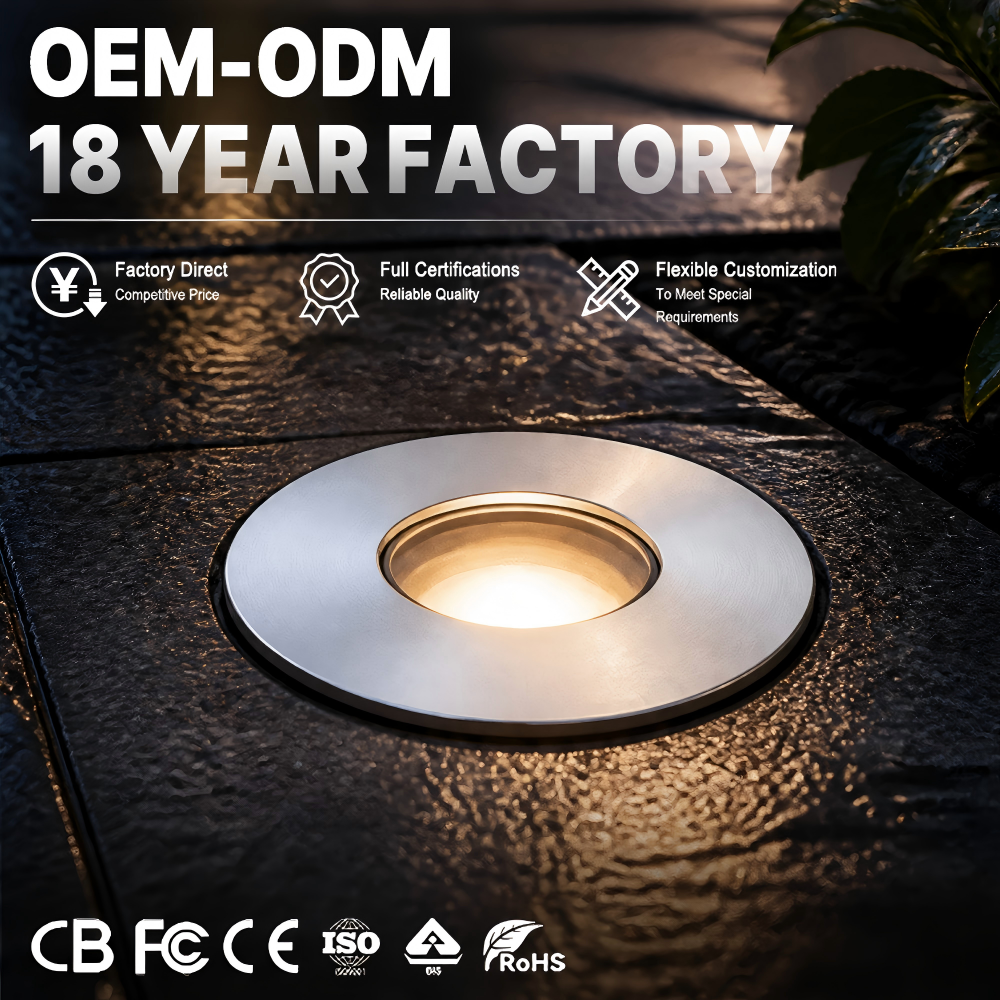
Round recessed luminaires with stainless steel faces, separate mounting sleeves and model-specific installation openings.
Products in MA Series
2 product groups
ModelsMA32 · MA42 · MA50
1–5 WListed power range
Small round luminaires with separate mounting sleeves.
View Product
ModelsMA65 · MA80 · MA100 · MA120
6–24 WListed power range
Larger MA round uplights with separate mounting sleeves.
View ProductArchitectural In-Ground Lighting
Shallow round bodies with four face diameters. Compare the 43 mm overall height and 24 V DC supply before planning the recess.
Products in MB Series
1 product group
ModelsMB100 · MB125 · MB150 · MB170
3–12 WListed power range
A shallow body format with four round face sizes.
View ProductArchitectural In-Ground Lighting
Round housings in compact and larger sizes, with different body depths and a confirmed AC input-voltage listing.
Products in MC Series
2 product groups
ModelsMC100 · MC125 · MC150 · MC170
3–18 WListed power range
Four smaller round housing models within the MC Series.
View Product
ModelsMC195 · MC220 · MC260
24–48 WListed power range
Three larger round housing models within the MC Series.
View ProductArchitectural In-Ground Lighting
Multi-lens, adjustable and dedicated COB reflector groups. Model drawings distinguish the luminaire from its mounting sleeve.
Products in YC Series
4 product groups
ModelsYC-020-1 · YC-020-2 · YC-020-3 · YC-020-4 · YC-020-5 · YC-020-6
3–48 WListed power range
Six multi-lens models with separate mounting sleeves.
View Product
ModelsYC-020-7 · YC-020-8
36–72 WListed power range
Two larger multi-lens models in the YC 020 range.
View Product
ModelsYC-030-1 · YC-030-2 · YC-030-3 · YC-030-4
3–36 WListed power range
Discrete LED and COB source configurations on selected models.
View Product
ModelsYC-038-COB-1 · YC-038-COB-2 · YC-038-COB-3 · YC-038-COB-4
10–50 WListed power range
Four round models in a dedicated COB reflector group.
View ProductArchitectural In-Ground Lighting
Linear aluminium profiles in slim, standard, flanged and deeper formats. Compare real cross-sections rather than interpreting model codes as dimensions.
Products in MDY Series
5 product groups
ModelsMDY-D2645-49 · MDY-D3047-39 · MDY-D3052-40
12–24 WListed power range
Three narrow profiles for linear in-ground lighting.
View Product
ModelsMDY-D3060-30 · MDY-D3065-26 · MDY-D3565-38 · MDY-D4065-27 · MDY-D4565-28 · MDY-D5065-29
12–48 WListed power range
Six non-flanged profiles for comparison within the MDY range.
View Product
ModelsMDY-D3047-4548-51 · MDY-D3052-4554-52 · MDY-D3565-6065-41 · MDY-D4065-42 · MDY-D5065-6566-37
12–48 WListed power range
Five linear profiles with separate body and face-flange dimensions.
View Product
ModelsMDY-D4070-08 · MDY-D4085-34 · MDY-D4585-35 · MDY-D5085-36
12–48 WListed power range
Four deeper non-flanged housing profiles.
View Product
ModelsMDY-D4085-6585-57 · MDY-D4585-7085-60 · MDY-D5085-7585-62
12–48 WListed power range
Three deeper housing profiles with wider face flanges.
View ProductProduct Categories
Browse CRANE’s core architectural lighting categories for facade, exterior and landscape lighting applications.
Linear wall washing for facades, exterior walls and architectural surfaces.
Explore Category →Powerful exterior illumination for facades, structures and landscape projects.
Explore Category →Continuous linear lighting for architectural outlines, facade details and exterior structures.
Explore Category →Dynamic point-source lighting for media facades, outlines and architectural effects.
Explore Category →Flexible linear lighting for coves, outlines and outdoor architectural details.
Explore Category →Recessed exterior lighting for facades, pathways, landscapes and architectural accents.
APPLICATIONS
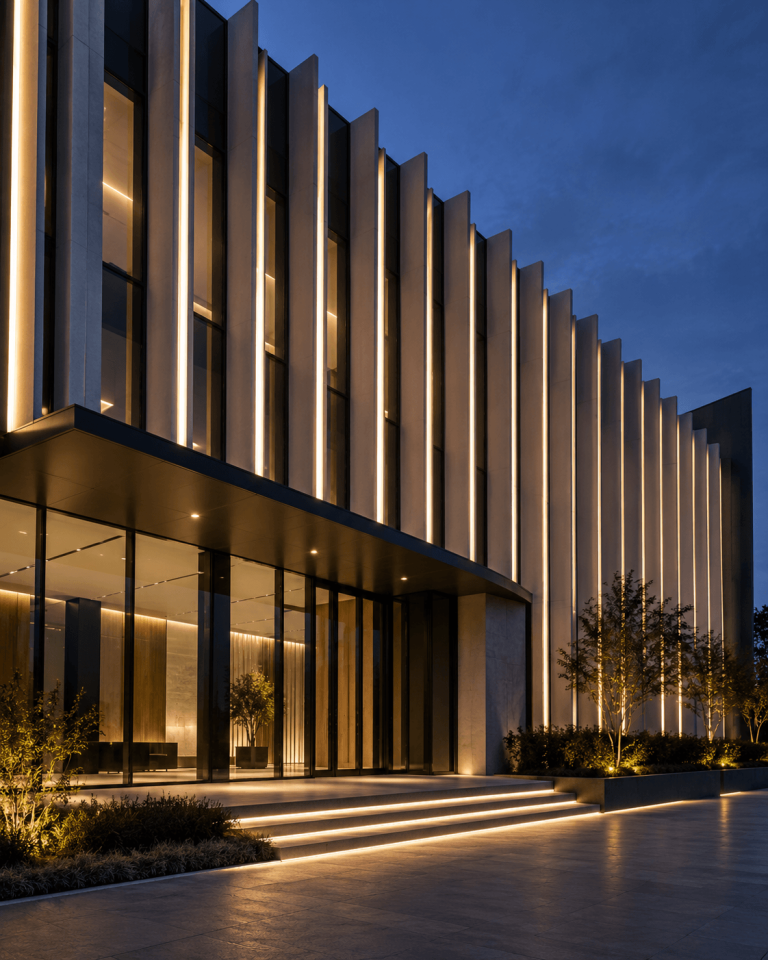
Use recessed uplighting near facades, columns and architectural elements to create vertical illumination from ground level.
Explore Solution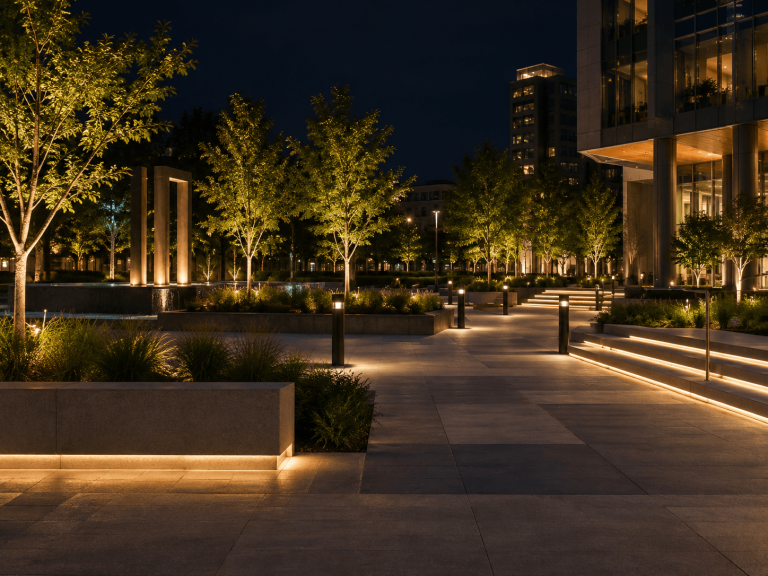
Highlight trees, planting, walls and landscape features using discreet ground-recessed luminaires integrated into outdoor environments.
Explore Solution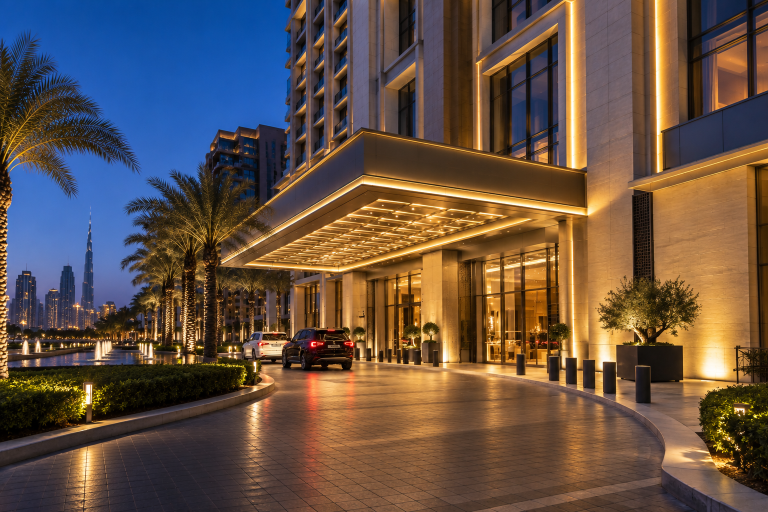
Integrate ground-level lighting into entrances, pathways, facades and landscape areas to support refined hospitality environments.
Explore SolutionLIGHTING EFFECTS
Project light upward from ground level to reveal columns, vertical surfaces and architectural forms.
Use focused upward illumination to emphasize structural rhythm, facade details and narrow architectural features.
Illuminate trees, planting and outdoor focal points from below while keeping the luminaire visually discreet.
SELECTION GUIDE
Ground material, fixture position, pedestrian access and surrounding site conditions should be reviewed before selecting an inground luminaire.
Beam distribution should be selected according to target width, target height, fixture distance and the desired degree of architectural emphasis.
The height of a column, facade element, tree or landscape feature influences the required beam distribution and fixture placement.
Water accumulation, drainage design and surrounding installation conditions should be reviewed carefully when planning recessed ground lighting.
Pedestrian or vehicle access, paving structure and installation surface conditions should be considered according to the specific product and project environment.
Exposure, temperature, soil or paving conditions, maintenance access and environmental factors should be considered during product selection.
PRODUCT COMPARISON
A recessed fixture integrated into the ground or paved surface.
A directional fixture typically positioned above or on the landscape surface.
ENGINEERING SUPPORT
Inground lighting depends on the relationship between installation position, target geometry, beam distribution and site conditions. Drawings, sections and installation details can be reviewed before the final luminaire configuration is confirmed.
FAQ
Compare the target surface, intended light direction and available recess. Round models suit individual uplighting positions; MDY profiles provide a linear format. Confirm the required distribution, spacing and installation detail for the project.
Use the model-specific original drawing. Luminaire body, face cover, mounting sleeve and flange dimensions are different measurements. Where no installation opening is specified, do not treat a body or sleeve outside dimension as the required clearance.
Start with the target and desired distribution, available recess and ground construction, exposure, access and supply. Compare exact fixture, mounting and installation documents; confirm the applicable tested loading where the site may experience traffic.
A suitable drainage design is needed to manage water around the recess and connections. Coordinate it with the ground construction and product instructions; an IP rating does not itself remove the need for drainage.
The selected model’s rating describes protection under its applicable test conditions. IP67 does not establish permanent immersion; IP68 depth and duration must be confirmed for that specific product. Neither rating alone defines the completed installation or its connections.
Do not infer vehicle suitability from IP, IK or appearance. Obtain the applicable tested static and dynamic loading conditions and the required installation detail for the exact model before specifying a vehicle area.
Adjustable optics can help where the fixed installation position requires a particular aim. Confirm the selected model’s adjustment direction, limits, procedure and access; do not assume remote or external adjustment from the product name.
Provide the target and desired optic, proposed fixture and quantity, ground section, available recess, drainage and cable route, site exposure and any traffic or load requirement. Request the model-specific installation and applicable test documentation.
START A PROJECT
Share your landscape plans, facade details, installation conditions or lighting concept to begin a focused discussion about suitable LED inground lighting products and project requirements.